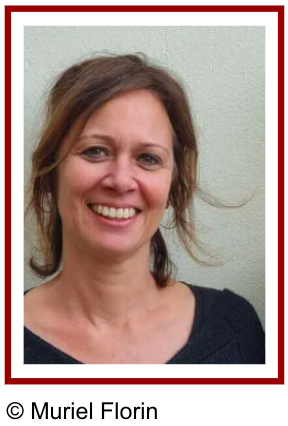
Nathalie Mandairon is a cognitive neuroscientist at the Lyon Neuroscience Research Centre. Specialising in olfactory perception, she studies the neural mechanisms involved in the processing of smells. Alongside Xavier Fernandez, she coordinates the Groupement de Recherche Odorant, Odeur, Olfaction (GDRO3), a CNRS initiative bringing together laboratories from various disciplines to explore issues relating to smells and odorants.
Founded in 2015, the GDRO3 aims to develop cross-disciplinary research projects focusing on smell. Research teams approach the subject from a broad perspective, ranging from the study of odours themselves to their physiological perception and their many applications. The GDRO3 seeks to foster a network of collaboration and exchange among researchers working on smell, a field with multiple facets and applications. Its objective is to bring together and engage the scientific community around smells and odorants.
Every year, the network holds an annual research meeting in a city near a CNRS research centre. This year, the meeting took place in Grenoble on 8 and 9 October.
FdD Per Fumum : Could you tell us briefly about the latest GDRO3 meeting, which took place in Grenoble from 8 to 9 October 2026? What was the theme or particular focus of this edition ?
Nathalie Mandairon : “We welcomed around 80 participants to a rather unusual venue in Grenoble: the Espace Sacré-Cœur, located next to the basilica of the same name. It was a very pleasant setting, and we received a warm welcome. The GDR03 meeting programme is structured around several activities: conferences, flash talks, a young researcher award and a masterclass. This year, we organised five conferences. The idea is to bring together very different disciplines that reflect the diversity of the GDRO3 : neuroscience, chemistry, and the humanities and social sciences. We explored topics including brain lateralisation, the historical reconstruction of olfactory experiences and the neuroethology of olfaction, with, for example, research into the links between olfactory and visual perception. We also give considerable attention to young researchers through the flash talks and the young researcher award. We had around fifteen presentations, which was particularly interesting. One of the distinctive features of these meetings is that we always try to give the masterclass a local flavour, connecting it to the city hosting us. In Grenoble, we therefore dedicated the masterclass to the scents of the Alps. We attended fascinating talks about why alpine flowers produce fragrances, and about the role of scents in recognising Alpine mushrooms. And the icing on the cake was a presentation by Lisa Montiel from Atelier Chocolat Tribona, based in Voiron, who introduced us to the world of chocolate-making. It was fascinating ! “
FdD Per Fumum : After more than ten years of the GDR O3, which questions about olfaction do you find most fascinating today, or which remain largely unexplored ?
Nathalie Mandairon : “Olfaction truly lies at the intersection of several very different disciplines. In chemistry, one of the major fundamental questions remains how we move from the structure of a molecule to the perception of a smell. Modelling approaches are opening up interesting possibilities today, but this question remains unresolved. It is fascinating, but complex. In neuroscience, we are trying to understand how the brain constructs the identity of a smell and its emotional value. We are also interested in how this representation and emotional value can be influenced by experience, context, learning, ageing and stress. In particular, we want to understand why smells have such powerful links with memory and emotions. In the humanities, we are trying to understand the role of perception and how it is shaped by our individual histories, our language and our culture. We also seek to understand how societies develop their own representations of perfume and how these evolve over time. Ultimately, the challenge is to connect all these different levels: from the molecule to the receptor, and from perception to society. That is precisely the value of our interdisciplinary network, the GDR O3.”
FdD Per Fumum : At GDR O3 meetings, you bring together many different research disciplines around the sense of smell. Do you feel that science is progressing quickly ?
Nathalie Mandairon : “Olfaction is an especially complex sensory modality, particularly because there is no straightforward correspondence that allows us to predict perception directly from a physical or chemical characteristic. In vision, for example, we can link a colour to a wavelength of light. In hearing, the pitch of a sound is linked to its frequency. In olfaction, things are much more complicated. We are dealing with a multidimensional chemical space. Today, we cannot predict how a smell will be perceived based solely on the structure of a molecule. This chemical complexity is compounded by the complexity of the biological system. We have several hundred olfactory receptors in our nasal cavity, which operate through what is known as combinatorial coding. The brain then processes this information to construct not only the identity of the smell, but also its emotional value. And all of this is also influenced by culture. Olfaction therefore requires chemists, biologists, neuroscientists, psychologists, philosophers and researchers in the humanities and social sciences to engage in dialogue. It is precisely this interdisciplinarity, which we seek to encourage within the GDR O3, that makes the field so rich.“
FdD Per Fumum : Within the GDR O3, a chemist, a neuroscientist, an art historian specialising in perfume or even an industry professional can all work on the same subject: smell. In your view, is this diversity of perspectives the key to making discoveries today ?
Nathalie Mandairon : “Yes, we need these different disciplines to answer fundamental questions. I can give you two examples. The first is the 2025 GDR O3 Young Researcher Award, which recognised work on the phenomenon of Proust’s madeleine. This project brought a concept originating in literature and the humanities into dialogue with experimental approaches to autobiographical memory, perception and the neurological foundations of memory. Another example concerns research into the fragrance of roses. Researchers from Saint-Étienne worked with researchers from Lyon, including my own team, to understand this phenomenon. We started by looking at the genes involved in the plant’s production of odorant molecules, and then studied how these molecules are detected and perceived by the human olfactory system. These are two examples of questions showing how disciplines that may seem far removed from one another can engage in dialogue and work together. It is precisely this cross-fertilisation of approaches that allows us to explore a single subject in all its complexity.“
FdD Per Fumum : Support from the Per Fumum Endowment Fund enables young researchers in particular to attend these meetings and present their work. What can these exchanges concretely change in the career path of a young scientist ?
Nathalie Mandairon : “This support is extremely important for young researchers, because they are the ones who keep research going on a daily basis. Doctoral and postdoctoral researchers carry out a large proportion of the experiments conducted in laboratories. These meetings first give them the opportunity to present their work and compare it with that of other researchers and their peers. They also allow them to build their own scientific networks while broadening their scientific knowledge. These networks are important for several reasons. They enable young researchers to interact with other scientists, but also to prepare for the next stage of their careers. Generally, after completing a thesis, they go on to do a postdoctoral position in another laboratory. They therefore need to choose a new research team, and these meetings give them a broader understanding of the work being done in their field. The GDR meetings do not bring together only the academic world; they also welcome industry professionals. We have people working in the field of olfaction, perfumers and professionals from the food industry, among others. These encounters can lead to new ideas and collaborations, but they can also influence the direction of someone’s professional career. For young researchers considering a career outside academia, this is a fairly unique opportunity to discover the diversity of these professions and, above all, to speak directly with the professionals involved. Per Fumum’s support for these meetings, including through travel grants, is therefore essential. These grants enable researchers to attend regardless of their laboratory’s financial resources. They can thus benefit from genuine scientific and professional opportunities. This year, we were able to award two travel grants.”
FdD Per Fumum : And how exactly are the awards decided ?
Nathalie Mandairon : “That’s a good question! We put together a jury, generally shortly before the conference, based on the people who have registered. It is made up of researchers, and we try to make it as interdisciplinary as possible, with chemists, biologists and representatives from other fields. The idea is for the jury’s composition to reflect the diversity of the GDR. This year, the jury had around six members, including a chairperson who introduces the context and explains to the candidates what is expected of them.”
FdD Per Fumum : Which young researcher projects received awards at this year’s meeting ?
Nathalie Mandairon : “Six applications were submitted this year, and the standard was really high. The Young Researcher Award went to Typhaine de Simone, from the CNRL, for a project examining the use and importance of olfaction in human beings beyond its purely adaptive function. The Jury’s Favourite Award went to Sandra Barré, for a thesis in aesthetics devoted to olfaction in art. Finally, the Jury Award went to Ulrich Ambassa, a chemist from Nice, for his research into the perception of the naturalness of smells. As you can see, the subjects are very different: one falls within neuroscience and psychology, another within the humanities and aesthetics, and the last within chemistry. That is also what makes these meetings so rich.”
FdD Per Fumum : What makes the GDR O3 relevant ?
Nathalie Mandairon : “What is particularly exciting about these meetings is their format. The talks are short, including the plenary lectures, and the young researchers’ presentations, or flash talks, are even shorter. This concise format allows people who are not specialists in a particular field to take an interest in the presentations and follow them. It requires an effort from all the speakers: they have to make their research understandable to the entire audience, even though part of the presentation will inevitably remain more technical for specialists. This is important in a network like ours, where participants come from very different disciplines. We need to ensure that knowledge circulates and that everyone can understand the issues and challenges behind the research being carried out by others.”
FdD Per Fumum : What personally fascinates you about olfaction, and what would you like the general public to understand better about the sense of smell ?
Nathalie Mandairon : “I think it is important for everyone to become aware of the role that our sense of smell plays in our quality of life and well-being. Things may have changed somewhat in this respect because of Covid. We become aware of how important our sense of smell is when we lose it. This is often the case: we have to be deprived of a sense before we fully appreciate what it gives us. Olfactory disorders can be associated with changes in emotions, a reduced enjoyment of eating and a deterioration in quality of life. They can also be linked to an increase in depressive-type symptoms behaviours.”
FdD Per Fumum : You mentioned the doctoral students you supervise. What exactly does your role involve throughout their thesis ?
Nathalie Mandairon : “First, we propose a thesis research topic to them. We then help them find funding, or support them in their search for it. We supervise their experiments and provide them with the means to carry them out. We train them throughout their doctorate: we explain the subject, the experiments to be conducted, statistical analysis and data analysis more generally, as well as how to write a scientific paper. We follow their progress throughout their thesis, with the aim of helping them gain confidence and gradually become capable of doing more and more things independently. And then, depending on the student, some also come up with their own ideas and suggestions during the course of their thesis. That’s fantastic ! “
